Translate

The content and opinions expressed in this blog are mine. They do not represent the US Government or US Peace Corps - Jud Dolphin

Tuesday, September 28

Ordinary Life: Endings and More

I should have expected it to happen. Like most people, I thought that normal everyday life would just keep on keeping on, but of course it doesn’t.

Ordinary life is always changing. Usually it’s incremental and we hardly notice. But sometimes out of the shadows of consciousness, death intrudes.

We are sitting in Yelena’s small office finalizing plans for the fall. There’s excitement at Hearts of Love. The Computerized Learning Center is up and running. Thanks to a grant from USAID, four brand new computers, a printer, white board and projector are ready to introduce our children to the world of technology and learning.

Suddenly, Valaya, our bookkeeper and dedicated volunteer, enters. She is noticeably upset. She tells us that Babushka has died. She fell down from an apparent heart attack and no efforts could bring her back.

At first, I couldn’t believe it. Just last week, I ran into Babushka and her granddaughter. Both are regulars at Hearts of Love. The granddaughter is in my Friday art class. She is troubled emotionally being caught in a dysfunctional family where her mother is unable or unwilling to care for her. Babushka has stepped in and given the little girl some stability and love.
Posted by Picasa
Babushka and I sharing tea with the children

Babushka always greeted me with a smile and warmth. I thought of her as a kind and generous woman. She was constant in her presence and help. Every Friday when her granddaughter was in my art class, she joined the other women in creating beautiful beaded flowers, like the ones we sold at last year’s auction. We all took it for granted that she would keep on keeping on, but not now.

Valaya, who is a strong Ukrainian woman, tries to maintain her composure, but cannot. Her sobs underscore the change that has happened. We all confirm it with our own sadness.

Later in the afternoon, I walk through a cemetery near my new apartment. I feel like I want to be alone with my own thoughts about life and death. In the year that I have been away from America, three dear friends have died. Babushka’s death brings back memories of them. At the cemetery I feel close to the dead - both known and unknown. It seems comforting.

I wind my way into the expansive grounds. There are no paths. I must squeeze my way between crowded burial plots. Each is situated east to west as the sun rises and falls. Soon I am surrounded by gravestones and can no longer see the streets or buildings beyond.
Strangely, many of the gravestones are etched with life like portraits. The dead may be buried but a two dimensional image remains. Some stoically stare ahead and others warmly smile as I pass by. I think, “remembering the dead has a kind of realism in Ukraine.”

I notice small picnic tables and benches at many grave sites. “What are they doing here,” I wonder. It seems strange, until I learn about an ancient custom that is still practiced.

On the Sunday after Easter, families bring Ukrainian picnics to graveside. Some of the same foods that the deceased savored while living are set upon the table.

Although it is a blustery grey September day, I imagine a white table cloth embroidered in red flapping in the wind…a table laden with dark bread, cheese, kielbasa, tomatoes, cucumbers, peppers, salads and special dishes like the eggplant Oksana made for me a few weeks ago. All is prepared to remember the departed ones and share a family meal in their honor.

It’s called Provody combining a belief in Christ’s victory over death, the ancient wonder of spring time rebirth and continual family love for the departed. When you understand a little about another culture, picnic tables in a cemetery are not so strange.

Babushka was only 57 when she died last week. I have learned that Ukraine has an alarmingly high death rate. It’s pegged at 16.3 per thousand people. Prevalent smoking and excessive use of alcohol add to the problem. Combined with a declining birth rate, the UN warns that Ukraine could lose as many as 10 million people by 2050. That’s more than 20% of the current population of 46 million.

Of course, every generation dies and the next one creates its own everyday life. I remember my grandmother Dolphin sitting on her front sun porch. My childhood memories see her surrounded by house plants, starched laced curtains and green window shades drawn down exactly half way.

My grandmother would tell stories about this neighbor and that neighbor who had died. As a youngster, it was a little creepy, but now I understand or at least I think I do. It was her way of dealing with ordinary life that was changing - slipping away one neighbor at a time.

Babushka died suddenly. All of us at Hearts of Love are sad and we know that we will need to make even more room in our hearts for her granddaughter. She may be troubled, but she is not alone. There is always room in ordinary life for more love...always.

Saturday, September 11

Ordinary Life: Russian Visitor and a Birthday

He is Russian and I am American. As a young man, he worked on a production line building Soviet rocket engines. He was a member of the Soviet military and I am the first American he ever met.

We speak different languages and have lived different lives, but from the moment I met him, I sensed that we would become friends, but I had no idea how we would be thrown together


Mikhael is 70 years old and the father of Oksanna, my good friend. He's visiting from the southern part of Russia. In Konotop, it is common for some relatives to live in Russia and others in Ukraine. The border is a geopolitical construct, but for families it makes little difference. These days they can move freely.

Today is Oksanna's son's birthday party. We will go to the river for a celebration. Another Peace Corps Volunteer and myself are honored to be included in the "family."

Maxsim is 16 and in the last year of school. In Ukraine, there are 11 years of school though many young people then attend an institute. It's like an American junior college.

Ukrainians value education although their methodologies are often more geared to memorization and repetition. The educational reforms that happened in America post World War II are just beginning to seep into Ukrainian schools. Peace Corps is helping by assigning our largest group of volunteers to Teaching English as a Foreign Language (TEFL).

I am introduced to Mikhael. We shake hands as is customary among men here, but not with women. While Americans might wave a quick hello to a friend, I have seen Ukrainians take a detour to the other person, make physical contact by briskly shaking hands and then move on, sometimes, without speaking a word. It's a ubiquitous greeting even three year old boys do it.

After introductions, we pack stuff into the Soviet era utility van that Tolleg (Oxanna's husband) uses for work. There is the front seat and one passenger bench behind. The rest is open space.

A big pot of shashlick is set down. It is a special treat reserved for special occasions like this one. Chunks of pork are marinating in a creamy mixture of onions, garlic and spices.

A pit will be dug and a wood fire made. Hardwoods, like cherry, are often used since they make for the best shashlick. The meat will be skewered and cooked over the glowing coals. The men are the ones in charge here - just like an American barbecue.


Oksanna has made an eggplant relish. This blend of eggplant, tomatoes, onions, peppers and of course lots of garlic is a favorite of mine. She smiles noticing that I have spied it. She promises to show me how to make it . I will pass the recipe along.

What's a birthday without a cake? Actually, a cake is not so traditional in Ukraine, but I decide to Americanize this birthday by using my spring-form cake pan again. I make a yellow cake dotted with several handfuls of blueberries. It gets a chorus of "ahhhs" as I carefully lay it on top of the mound of stuff filling the van.

There are more traditional foods too. A pile of river fish have been breaded in a light batter and fried. Another pot holds boiled potatoes simply sprinkled with parsley and butter. Of course no Ukrainian meal would be complete without lots of fresh tomatoes, cucumbers and green onions along with bread and cheese.

Oh, don't forget the vodka. Now I think we are ready to go.

Mikhael and I are directed to the passenger bench where we both easily fill all available space. Neither of us are small men.

The drive is an adventure. The van's shock absorbers are long gone. The road is a washboard of pot holes and asphalt patches. There is no avoiding bumps and what feels like leaps into the air. Mikhael and I collide squashing our bodies together. We start holding on to one another for stability...as if that will help.

The road goes from asphalt to gravel to dirt. The last several kilometers are simply a cow path curving across an open field from a small village towards the river. I savor a Ukrainian sun drenched day as the the bumps and leaps become ever more intense. I look off to the horizon imaging that I am at an amusement park and riding the Dare-Devil-Twister.

Suddenly with no warning, the seat we are sitting on gives way. Both Michael and I flip backwards with a thud. The big American and the big Russian lay side by side on their backs with legs flailing in the air.

After a moment of silence, we look at one another and begin to laugh. Others want to help us get up, but we just lay there laughing and laughing. I cannot remember laughing so hard.


Eventually we unscramble our bodies. No one is hurt. My cake is the only victim. The spring-form pan has a big dent and the cake is partially smashed. We laugh again. It will still taste good.

Later in the day, we walked by the river and talk. The conversation recalls our shared Cold War history. I wonder what he thinks about the Cuban Missile Crisis. "Americans were afraid of nuclear war," I say "As a school student I use to practice hiding under my desk or cowering in the hallways as if it would protect me from a blast."
That's when I learn that Mikhael worked on rocket engines - maybe the same ones we feared.

He tells me he has no recollection of this Cuban Missile Crisis. He says, "Most Russians did not worry about nuclear attacks." I'm astonished since during the Cold War, Americans were so preoccupied with the fear of nuclear weapons. I wish my Russian was better to deepen our conversation. He says, "but life is better now - Da?" I agree.

Ukrainian picnics and dinners go on for hours, but eventually they end. As the sun sets, we drive home. The seat has been turned and leans against the inside of the van. Mickael and I are again smashed together again holding on to one another for security and now in friendship.

I brim over with a warm satisfaction. What a happy birthday it has been for all of us. I think how unusual for me to be thrown together with a Russian and Soviet military man. But then again, in Konotop and Ukraine, the unexpected happens all the time.

Wednesday, September 1

Ordinary Life: Transportation

This is a story of a boyhood dream come true. If I was a young boy, I would shriek with excitement. But since I am a grown man, I hide my feelings behind a broad smile.

My story starts with an ordinary ride. In a country where private automobiles are still not common, folks either use foot-power or a form of public transport. It forces people from all walks of life (except the very rich) to rub shoulders with one another. I think it is a daily reminder that we all are part of the human family.

In town, Marshrutkas are common. These are mini-buses that are often used by retirement homes in the USA, except here they have been retrofitted with extra rows of seats. They make airplane seating seem luxurious.


Konotop has 17 routes. For 1 1/2 grievnah or about 18 cents you can travel from one end of town to the other and all points in between. But there are no transfers. You will need to pay another 18 cents.

Konotop has a Tram Way too. It's popular among seniors, because they get to ride free. Built during Stalin's time, Konotop is the smallest city in Ukraine with such a system.

I think it has a lot to do with the fact that during Soviet times Konotop was a center for military deployment. I recently learned that of the three major Soviet Tank Divisions, Konotop was home for the most western one.

Today, I take the Tram Way (it's free for me!) to the Vakzal and meet up with Babushka. She has invited me on an excursion into the forest. We will take an Elecktrichka instead of a Poyezd.

The Elecktrichka is an electric powered train and differs from the diesel Poyezd since it usually travels shorter distances between towns and villages. There are no sleeping compartments and people sit on benches facing one another three by three. For less than a dollar, we will travel an hour into the countryside.

As seats fill up, vendors walk the aisles hawking their merchandise. One man sells an assortment of magazines and newspapers. Another offers socks, shoe laces, gloves and other small household items. A much older woman, who seems to be permanently bent over, drags big bags filled with sodas, bottled water, candies and cookies.

We are a diverse group on the Electrishka. People, who are dressed as if they have some money, sit across from those who have little. Families with children are next to pensioners, army men, university students and on this trip, a spiked-heeled and mini-skirted young woman with painted nails about an inch long. She stands out, of course.

I settle into the bench alongside Babushka and across from several of her friends. Using my small print Russian/English dictionary, we have fun "talking" with one another. I find that smiles and laughter make for good communications in any language.
.
Unexpectedly, Babushka stands up. She beckons me to follow her. "Where are we going," I wonder. We sway our way through the moving car towards the front of the Elecktrishka. I see her conferring with one of the conductors and before I know what is happening, I am sitting next to the engineer looking out the train's front window.

In front of me, an array of gauges, throttles and pedals control the speed and blow the whistles. He explains some of the workings of the train and points out the safety lights that switch from green to yellow to double yellow and red. I notice the train tops at 55 kilometers per hour.

It's every child's dream.

In my childhood, I remember the family getting a 45 RPM record player. It was the kind which took a stack of records and automatically dropped the next one into play.

Among the records was a double record story about a boy and a train. I think it was called "Sparky and the Talking Train." I listened to it over and over again. Although I cannot recall the story line, I do remember the feeling. It was magical.

I beam a Grand Canyon wide smile. Today has become magical. I'm Sparky. Although I do not get to run the train, I am right next to the engineer. When he blows the whistle, I imagine some talking. Now would that be Russian or English?

Monday, August 30

Ordinary Life: Into the Forest

My day begins with a phone call from Annya. I have known her for over a year and every time she calls me something interesting is bound to happen. "My Babushka wants to know if you want to go to the forest."

Among Ukrainians, going to the forest is one of the preferred leisure activities. Ukrainians love their land and especially the forests. I've heard many a discourse bestowing the benefits of pine scented air and the healing qualities of nature's beauty. They say going to the forest can heal mind, body and soul. Who am I to disagree?


Annya continues, "My Babushka has a special place to pick ground apples. Will you join her and a couple of friends?"

I have learned to never say no to an invitation and immediately agree. I will learn about forging for ground apples.... whatever that may be.

It's a beautiful day. The oppressive heat of a few weeks ago is gone. Blue skies mixed with delicious marshmallow clouds hover over golden fields. The sunflower crop has been harvested and the corn awaits its turn. Distant clusters of people work fields by hand. I think they are harvesting potatoes for their family's winter meals.

Much of the land is unploughed. I am told that ownership disputes have not been settled since the demise of Communism. In addition, markets and infrastructure for crops are undeveloped. Ukraine is rich in natural resources, but has yet to benefit fully.

I look out over the Ukrainian landscape. I try to imprint the images into my mind. I am aware that my time in Ukraine is running down. Already I have been here more time than remains. I want to capture the sights for my old age memories.

Summer is turning towards Fall. Fields in greens, yellows and browns flow across the horizon. Mounds of hay dot the landscape. Stork nests adorn the tops of electric poles like large baskets A horse drawn cart trots down a two rut path. Flocks of geese waddle across a pond. Babushkas sit on benches outside of village homes watching our train swoosh by.

About an hour later, we arrive at a village station. It's like hundreds of others that mark destinations across Ukraine. I am surprised to see a professionally dressed woman waiting for us. She is the Director of the Station. I learn that my Babushka worked for many year as a ticket-taker on the trains. She knows everyone!

"Please come inside," says the Director in Russian. "We have prepared a little welcome for you." Within moments, we gather around an office table. Pizza, chicken cutlets and of course, fresh tomatoes and cucumbers appear along with a tort (cake) and a small bottle of vodka.

We toast to health and then to friendship and then to women and then the vodka runs out. I savor the moments. An ordinary train trip has been transformed into an occasion. What a welcome!

Now into the forest, we go. Sun shadows speckles are path. A backdrop of white pines scent the air. Here and there, a cluster of birch trees stand out. I am feeling the healing qualities.

We walk and then walk some more. After about 3 kilometers, we spy our first ground apples. They are about the size of golf balls or even smaller. They grow under the white pines on ground hugging shrubs. "Pick the yellow ones and leave the green for later," my Babushka instructs.

We get busy filling bags and then pouring the contents of our bags into a big sack. Babushka and here sister have a family dispute about the best way to hitch the sack to the bike. I have been taking photos and now capture the squabble. We all begin to laugh. Sisters will be sisters.

The ground apples are terribly soar like lemons. Each one will be cored and either boiled for compote juice or ground into marmalade. It's a lot of work.
As we scurry back to catch our 6:00 pm train to Konotop, I realize that this trip is more than foraging. It's a chance to enjoy friendships, delight in impromptu parties, see the countryside and taste the beauty of nature. For this American, it is also a way to remember a Ukrainian way of life.

Thursday, August 5

Pebbles - Seen and Unseen


Like most Americans, I like to feel engaged and productive. Give me a project to work on. I am happy. Let me develop a strategy for that goal. I feel energized. Give me a problem to solve and I feel like I am making a difference. Sure at times, I can get to feeling overloaded, but still I would rather be busy than not.

Interestingly, this Peace Corps experience is changing my perspectives. Here I am learning about life when it seems empty, when there is no new project. People go on vacations or tend to family or plant gardens or get sick or a dozen other things.

At times nothing much happens. Life is still. Whatever shall I do?

A box of stuff stares at me from the corner of my apartment begging for attention. I have been ignoring it for several weeks. It's the left overs from my move into my new apartment. I must have some kind of phobia about unpacking that final box. It just sits there.

But today I finally say “enough procrastination” and dig in. After all, it will fill the emptiness of a hot muggy day. Here in Konotop the temperatures are soaring over 40C or 105F.

On top of the box is a newspaper from Bangkok. I must have tossed it there upon my return. I can't resist picking it up and noticing a small article that I circled on the back page - “Life Amid The Pebbles.” Interesting, I think and begin to read.

The author observes how a few weeds have managed to sprout on the rocky pathway of his garden. I think, "Who sees such things? Who has time to notice unless you are no longer so busy?" Interesting....

He continues by wondering how those weeds make it through a thick layer of stones devoid of soil or sand or water. “How can life thrive and grow in this parched and unfriendly environment?”

Indeed! My mind wanders to the immense challenges facing leaders in Ukraine.

Within in living memory, Ukraine has absorbed so much death and destruction into its collective psyche. Stalin's agricultural collectivization created an artificial famine killing more than 3 million previously independent peasants. Some say it was more like 7 million. Then came the Nazi occupation killing another 5 million in the war and devastating the countries infrastructure.

According to the UN Relief and Rehabilitation Administration, losses were enormous. No less than 2 million buildings and 1600 industrial enterprises gone. 714 towns and cities destroyed. Another 2800 villages devastated. Even here in Konotop, I learned that 1000 Jewish citizens met death as the Nazi Holocaust swept into our little city.

No Ukrainian is untouched. Horrid memories live in the collective psyche. This is not hyperbole. Sadly, it's truth. I guess that's why I am so struck by the courage of Ukrainian people to embrace life again.

The story of my Center for disabled children comes to mind. A mother with a disabled child overcomes her own depression and collective fatalism to create a Hearts of Love Center. This week 45 children with all sorts of disabilities are enjoying Day Camp.

I see the young girl who could not stand at our Spring Beauty Pageant because of a bone deformity. She has had an operation and her leg is in a cast now. It's part of a long term treatment. She gleefully swings around on crutches. I think she is beautiful.
A young boy has another bone disease and cannot walk at all. You would not know it by looking at him. He exudes energy and is so cute. But then you see that he is carried everywhere by counselors or when they are not available, he pulls himself across the ground with such strong little arms. He wants to be part of the action and I think he will always find a way.


The author of my article reflects more about pebbles.

"These days we are short of people who are willing to be the first stones who pave the way so that other stones can be laid down. The stones on the upper and topmost levels are the ones seen and acknowledged by people and society, but the first stones have to remain at the bottom.

“We hardly find people of this nature – those willing to be first stones that pave the way for others. That’s why virtuous creations rarely come about."

What kind of stones have I met in Ukraine? What kind am I? I sigh reflectively as I cut out the article for my "Good Stuff" file and finish unpacking the rest of the box. The stillness is no longer so empty. Thoughts of pebbles fill my mind.

A week passes and I am sitting on a bench at the Hearts of Love Center awaiting the start of Camp. The stillness of last week is replaced by the energy of children. Everyone is excited.

A young woman spots me, waves and moves in my direction. She is one of the translators who will help the volunteers from the UK who have come to help with Camp.

"I am so glad to see you again...so very glad, " she beams. Again? Honestly, I am having a hard time remembering where and when we met before. Noticing my uncertainty, she adds, " I was the translator for your group project. Remember?"

During training all new Peace Corps Volunteers have to pull together a community project. My group did some Internet Research and held a round table discussion with a few city officials, some university students and Peace Corps trainers. I never considered it much of a project until now.

"Your project changed my life."

I could hardly believe what I was hearing. "After that meeting, one of the Peace Corps staff asked me to apply for a position. Of course, I knew about the Peace Corps, but I never would have thought about applying for a position."

I smile in astonishment and she continues, " I owe it all to your training group. If I had not been invited to be your translator, none of this would have happened. I just love my job with the Peace Corps. It's like a new beginning for me."

I marvel at this unexpected story and imagine how her leadership is already effecting others. What more will she accomplish in the 35 or more years of her professional life?

Pebbles. Sometimes you get to be a pebble...even when you don't know it's happening nor understand how important it can be in another's life. And sometimes your pebble can be part of the foundation for a virtuous creation.

Monday, July 19

More than Language

Recently, I attended Peace Corps Summer Language Camp. It’s a chance to work intensively on language development. It can be either an albatross of frustration or golden opportunity depending on how you look upon it.


I try to be positive. Every day we’re immersed in the Russian language either attending classes or playing camp games. I marvel at the language expertise of some younger volunteers. They speak with a fluency that I can hardly imagine for myself. Often I do not know what is being said, but I keep trying. And sometimes, I surprise myself. I actually catch on to more than I ever thought possible.

I say to my classmates, “In Konotop, I am known as nominative case Jud. Everything I say is in the nominative case.” They laugh and smile when I say, “I have decided to make a change and take on noun endings.”

In Russian there are 6 noun cases with different endings for masculine, feminine and neuter. It gets more expansive. Each one can have as many as 4 variants. Do the math. That’s 6 x 3 x 4 = 72 endings. Repeat for plural forms. So deciding to take on noun endings is no trifle and speaking them can be daunting.
Wonderfully, I get lots of support from other volunteers. These gatherings bring us together. One of the best parts of my PC experience has been the chance to know energetic and dedicated younger people. We get to share many conversations.

I’m walking history. I tell them about the Viet Nam War and the Marches on Washington in 1968 and 1969. We all puzzle at why so many died and for what. Now Viet Nam has become a tourist destination. The government is still communist and the dominoes are still standing.
They talk about their generation’s war in Afghanistan, terrorism, human rights, alleviating poverty, the environment and more. I realize that they will be involved in many forms of public service. In a small ways, I try to encourage. But mostly, I delight in knowing that peace and justice ideals live on.

As the week progresses, I decide to take a language proficiency test known as an LPI.
For about 20 minutes I sit with a language instructor who asks me questions. I am able to respond and only miss one question. I am communicating in a language whose alphabet seemed impossible just a year ago.

I score intermediate low. It’s the same as I received after training a year ago. I think, “At least I did not fall backwards.” Even more, I now I feel like it’s a more solid score than before. I am actually encouraged.
Camp comes to an end. I say goodbye to friends and set off for the Train Station and a real-life language experience. As you know from reading my Blog, the Train Station can be a language and cultural challenge if not nightmare.

Heading the challenge list are the ticket agents. They are notorious for their attitude. Even Ukrainians complain about them.

“Please repeat,” I ask and I get a louder and faster response. It is not helpful. As I try my best to understand, from behind others crowd in. A lady is lurking over my shoulder adding here comments to my situation. It’s not unusual to have someone literally in your face – inches away.

Ukrainians and Americans have different needs for private space. Maybe the years of families doubling or tripling or quadrupling in small living spaces has altered their need for privacy and distance. Or maybe because Americans live in an expansive country, we expect more space. All I know, it’s unsettling. I leave the ticket counter to regroup for another try.

This time I am in a more buoyant and prepared mood. Although a lady behind me crowds in again, I am able to get, not only one ticket, but two for my connection. It’s a language and cultural victory.

Outside, there are five different platforms for departing trains. There is no posting of train arrivals and departures. Only loud speakers are gargling in Russian. It’s impossible. I decide to try a new strategy.

“Can you tell me what platform for the train to Neegan,” I say to an older looking couple. They do not know, but promise to tell me when the announcement is made.

I say, “Thank you so much. I only speak a little Russian.” They smile and say that I am doing very well. I continue, “I am a Peace Corps Volunteer in Konotop. I work with disabled children.” They ask me how long and I tell them for two years. A new friendship begins.

As departure time arrives, there is some confusion about which side of the train to board. The crowd surges to the left side. My new friends assure me that it will be on the right side and there is no need to move. They have taken me under their protective care.

But then, they decide that maybe they are wrong and they begin to usher me forward. Of course we are speaking some Russian in the midst of this confusion and I am only catching a part of it. Just then a young woman steps forward and offers her assistance in ENGLISH!!

Inside, we all sit together and begin a little conversation. I speak Russian and when my vocabulary fails, the young woman serves as translator. Others are drawn into our conversation. Stoic public faces that are typical of Ukrainian people get a hint of good humor. People are smiling at this American guest on the 3rd class Electrishka (electric train and least expensive way to travel) who’s going to Konotop.

As we wait, vendors are moving up and down the aisles. On an Electrishka, you can buy lots of things from socks to fly paper to food. My new friends say, “Here the bazaar comes to you.” We all laugh together and continue our conversation.

A young man, who is selling buns stuffed with cheesy potatoes, steps forward. He insists that I take one, but I decline. He insists more. I try to pay, but no. He will not take payment.
“It’s my gift to you,” he smiles.

The woman next to me says, “He is my brother.” When I say “your brother” using Russian, she corrects me. “No, brother in Jesus.” I say that I understand and with a smile she says, “Amen.”

A scene from Feeding the 5000 flashes across my mental screen. I try to share the bun, but a Babushka across the aisle tells me to save it for later. “You will be hungry.” Others agree and refuse my offer with much kindness. The train feels like a car load of friends.

It is interesting how reaching out is often met with kindness. I guess small kindnesses are contagious in any language. It's wonderful.

But then I get to thinking, why do we too often retreat and hold back when reaching out and helping one another can be so much more fun?

You can learn a lot more than language at Summer Camp.

Saturday, June 26

Bangkok Part I


"We are recommending medical evacuation," explains my Peace Corps doctor? During my mid-service medical exam, several suspicious marks were found on my skin. The Peace Corps doctors suspected basal cell cancer - not the dangerous type, thankfully. They decided that the best course of treatment would be a visit to their medical back-up center in Bangkok.>

Bangkok was never on my "must see" list, but here I am being medically evacuated or as some light heartedly suggest going on a medical vacation or a "Medic-Vac."

I arrive at 4:00 am in the morning after a 9 1/2 hour flight from Kiev. I am anxious about new language and money conversion and getting a taxi especially at this hour in the morning. But as I step off the plane, I see that I can relax. I am in a very modern world class airport that is only a few years old. It is quickly becoming a hub for all of southeast Asia.

I am relieved that signs are in local Thai (a form of Sanskrit, I believe) and English. It is easy to navigate through customs and to the baggage claim. My final anxiety is also relieved. My back-pack comes circling around.

Outside I get a taxi. My driver speaks staccato. He only knows isolated words in English. Now I know how my beginner's Russian sounds to my Ukrainian friends. A word here and a word there, but not much of the connecting lingo.

I think he is talking about the recent unrest in Bangkok. He keeps making gun-shooting sounds like kids do when they are playing "shoot 'em." It's unnerving at 5:00 am especially when each "shoot 'em" sound is followed with laughter. I have to take several deep breathes to still my mind from racing ahead.

I need sleep.

After 20 minutes of a fast and thrilling ride, I reach the hotel. I am greeted by two doormen and a desk clerk who are all smiles. I mean these folks really know how to smile broadly. They greet you with palms together and a short bow too. I feel so welcomed.

My room is clean and simple like many 2 star hotels I have stayed in. I have all the basics and a comfortable bed.

I am bone tired.

The next day I see my doctor. The Bumrungard Medical Center is directly across the street from the hotel. The Peace Corps has made excellent arrangements even providing a specialized nurse to accompany me. She is great.

I enter a spacious lobby that resembles a 5 star hotel lobby. I see a Starbucks, a few shops and even a WIFI cyber corner amidst clusters of stylish sofas and comfy chairs. There is no institutional look here.

A young smiling Thai woman greets me in English. She directs me to the second floor registration. All is done efficiently, like America, and with even more friendly patient care.

My doctor is remarkable. He spends about 30 minutes examining and explaining treatment options. Several times he asks if I have questions and he does it in such a way as to invite questions. Can you believe it?

After a brief time in the waiting area where containers of juice and water are offered, I return for treatment. The doctor spends another 20 minutes taking a few biopsies and doing some skin freezing to prevent further problems.

I am delighted with the care. Procedures are in keeping with what I know of American practices and I never got the feeling that he was in a hurry to see another patient. In fact, he gives me a restaurant recommendations and even draws a detailed map on how to get there.

The next day is for sightseeing. I want to go to the Grand Palace and Wat Phara Kaew, a temple complex where the revered Emerald Buddha resides. Getting there is a challenge.

I study maps and metro stations. The streets in Bangkok seem like a jumble of pick-up sticks. As best as I can tell, each neighborhood has a main avenue with smaller streets that run off of it and then smaller allies that run off the streets. The streets in each area are numbered. The odd numbers run off of one side of the main avenue and the even on the other. It is quite tricky for a westerner to figure out. Missing is the predictable grid pattern.

I venture off to the Sky Way, an elevated Metro that has been in operation for a few years. Bangkok is notorious for constant grid lock. The Sky Way speeds you to your destination in a clean modern system. Stops are announced in Thai and English. I am impressed.

Unfortunately, the public transit only takes me 3/4 of the way. Now I must catch a taxi. My driver speaks no English and has difficulty understanding my map which of course is in English script.

It's a struggle or as I prefer to think during my better moments, a new adventure. Somehow after 20 minutes of traffic jams and making a wrong turn, we get to the Grand Palace and Buddha Temple. I have no complaint. The driver smiles and gives me a discount for the wrong turn.

The vacation part of my "Medi-Vac" begins.

Bangkok Part II

I have to remind myself that I am not on a Hollywood set viewing a remake of the King and I. It is astounding to be here and to see the remarkable architecture close up. It is so unlike anything I have ever seen in the West.

The Grand Palace complex was established in 1782 by a King Rama I. When he assumed the throne, he declared the old palace not suitable. So a new one was designed and constructed. Kings get to do it their way.

The complex consists of his royal residence, a series of government buildings and the highly renowned temple of the Emerald Buddha.

The colors are bright and intense. The design is graceful yet strong. And the craftsmanship is evident in delicate mosaics, intricate carvings and epic paintings. I stand there mesmerized Tourists, like me, are busy snapping pictures. In every direction there is something dazzling to see.

As I walk I hear chanting in the distance.
This area is also a functioning Buddhist Temple. People go to the Emerald Buddha to honor the teachings of Buddha. As was explained to me, Buddhism is not so much a religion as it is a teaching about living in harmony and peace.. Still this place is one of the most venerated sites in all of Thailand.

The Emerald Buddha is actually green jade. When discovered in 1434, it was covered in plaster. Nobody took it to be more than an ordinary Buddha image. But some plaster on it nose flaked away and revealed a lovely stone beneath. Mistakenly, it was thought to be emerald. Hence, the legend of the Emerald Buddha began.

The Emerald Buddha is quite small. In the temple, it's overpowered by a massive and ornate altar upon which it sits. Other Buddha images flank the altar. Epic paintings adorn the walls depicting the life of Buddha including his Great Renunciation and Temptations to Enlightenment. All is ablaze with gold.


I stop and take off my shoes and enter this sacred space. The ritual is simple. Kneel. Bow three times with face to the ground and then with palms together say your prayers.

Often I am told, people pray for loved ones who have died. I pray for family and friends who have died, some recently, and imagine them in a safe and satisfying state.

Outside people pause at a cauldron of holy water and lotus blossoms. They use the blossoms to sprinkle themselves and one another.


It's a respectful ritual but done with smiles and a little playfulness. In an oppressively hot climate where it is normally 90 F or more, water is a welcomed relief. And in a world as troubled as ours, holy water should be shared gleefully.

For several hours I wander the Grand Palace complex. Here are a few more images for you to enjoy....


With the sun still blazing, I find an outdoor porch and enjoy an entire bottle of cold water.
Thailand has known warfare and lots of strife, but there seems to be an inner tranquility. Then I meet a young man from Indochina. He tells me something remarkable. Thailand means "Land of Peace." I never knew that before and now I will never forget. What a wonderful place...I think I'll have another bottle of water.

Enjoy Budapest

Budapest is funky in a good way. At least that's my first impression as we check into the Lavender Circus. The Hostel's lounge is cluttered with 50s and 60s memorabilia. Silent films are playing on the walls and in the hallways. It works in a Elvis and Beatles sort of way. Andrea is our host and makes us welcomed by offering a shot of Palinka - a homemade vodka. It's powerful.

At the suggestion of Andrea, we're off to Castro for dinner. It's a hangout for locals with tables so close you could sample from a neighboring plate. Posters fill the walls with Che and Castro and the Beatles sharing space in a psychedelic montage. Anyone over fifty knows the scene. Why didn't I bring my bell bottoms?

Next morning it's breakfast at The Central Cafe. Andrea tells us that it's a historic cafe and a favorite meeting place for artists and assorted rebels. "Imagine the plots discussed here," I say to Fran. "It's a place of elegance and intrigue." We savor our eggs and coffee latte and make our own plot for the day.

Budapest was united in 1873 when two separate cities came together forming Buda-Pest.
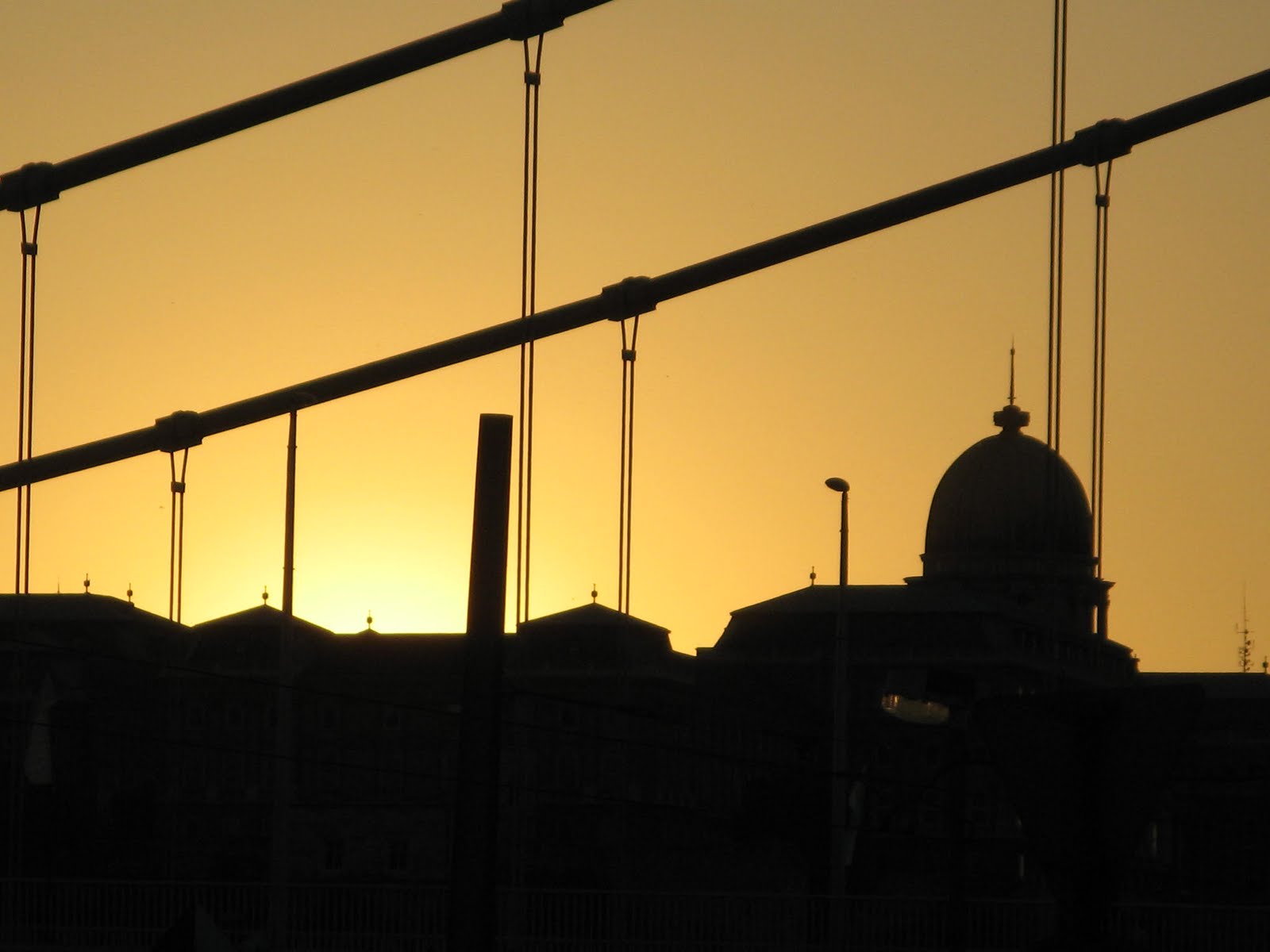
Beautiful bridges now span the Danube lending elegance to that union. There has been settlement here since before Roman times. During the Renaissance, Budapest became a hub of trade and culture.


The people have survived through many invasions and occupations. The Nazis and Soviets were the most recent.
In 1956 the Hungarian Revolt was the first crack in Soviet solidarity and foretold a different time when oppression and occupation would end. Through it all, I think the Hungarian spirit was never broken. It waited for the right time to breathe free again

Budapest is a delight to the eyes. Splendid architecture is around every corner. I read in a guide books that it's like the Paris of Eastern Europe. Maybe that's an overstatement, but not by much. The cityscape is like a massive painting. I can't wait to see the next scene. I take way too many photos, but I cannot help myself.


What makes these architectural treats so remarkable is the destruction that Budapest suffered during the Great War. More than 80% of the buildings were hit by bombs. I am not sure why, but the Soviets spent a lot of money and resources to bring the city back to the elegance we see today.

At night Budapest becomes magical. It's a city of lights spanning the Danube. Stroll along the river. Stop at a cafe for a glass of wine. Watch the sun slowly set over the Danube and hills beyond. Soak in the beauty of a city opening to the night.


Next day it's off to Castle Hill. Like bookends, the hill is framed by Mathias Cathedral and a Castle with lesser buildings in between. We ride an incline to the top and get a panoramic view of Pest. It's beautiful.


Matthias Cathedral has a 700 year history and is an icon of the Hungarian spirit. Tural, a mythical guard bird, keeps watch from pinnacles.
Even with Tural's watchfulness, the Cathedral has been sack and rebuilt several times.

During the Ottoman Empire occupation, it was converted into a mosque. Mosaics were white washed into oblivion and all images removed as required by Islamic practice. A statute of Mary was hastily hidden behind a false plaster wall. A century later when the Hungarians sought to oust the Turks, a volley of cannon balls broke through the plaster wall and Mary miraculously reappeared. So stunned were the Turks that their morale was broken and they lost the war. The Cathedral was once again Christian.


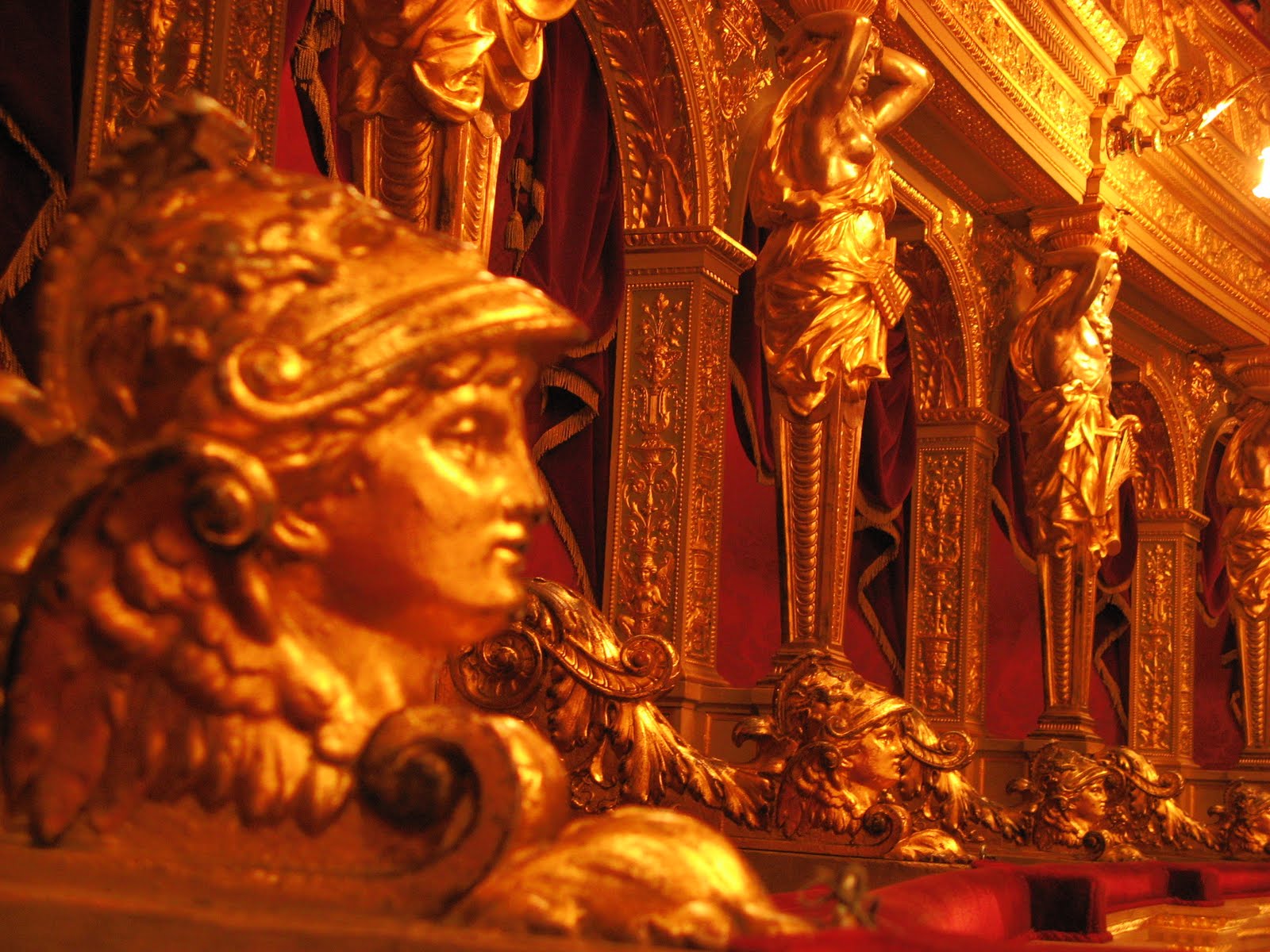
We extend our visit in Budapest and get a chance to try out a new Hostel. This one is next to Budapest Opera House. I'll long remember a late afternoon siesta with summer breezes waffling though tall windows as an operatic soprano rehearses across the street. Does it get any better?

We buy tickets for a world premier of a modern ballet. The grace and energy communicates emotions without words. Music and movement unites a diverse audience with the performers.
In one piece the audience is so absorbed that for a few seconds we forget to applaud. Then we remember and we applaud and applaud with deep gratitude and roses are flung onto the stage. Bravo!

A growing heat wave sends me to the mineral baths. Budapest is on a fault where natural mineral springs percolate streams of hot mineral rich waters. Locals and the government claim healing benefits.

I go to a bath with more than 18 different pools inside and out. Some are for swimming and others are for soaking. You can even visit a sauna and then jump into near freezing water. Brisk and refreshing, they say. I do not try it thinking that my heart will thank me.

I spent lots of time swimming followed by soaks in progressively hotter water. I must report that after a day lounging in baths, my body fells like a 35 year old. Gone are minor aches, especially my soar feet. I feel rejuvenated.


I love Budapest.


It's funk.


It's architectural beauty.


It's culture.


It's enduring spirit.


And yes, a cool swim on a sweltering afternoon.