Translate

The content and opinions expressed in this blog are mine. They do not represent the US Government or US Peace Corps - Jud Dolphin

Thursday, August 5

Pebbles - Seen and Unseen


Like most Americans, I like to feel engaged and productive. Give me a project to work on. I am happy. Let me develop a strategy for that goal. I feel energized. Give me a problem to solve and I feel like I am making a difference. Sure at times, I can get to feeling overloaded, but still I would rather be busy than not.

Interestingly, this Peace Corps experience is changing my perspectives. Here I am learning about life when it seems empty, when there is no new project. People go on vacations or tend to family or plant gardens or get sick or a dozen other things.

At times nothing much happens. Life is still. Whatever shall I do?

A box of stuff stares at me from the corner of my apartment begging for attention. I have been ignoring it for several weeks. It's the left overs from my move into my new apartment. I must have some kind of phobia about unpacking that final box. It just sits there.

But today I finally say “enough procrastination” and dig in. After all, it will fill the emptiness of a hot muggy day. Here in Konotop the temperatures are soaring over 40C or 105F.

On top of the box is a newspaper from Bangkok. I must have tossed it there upon my return. I can't resist picking it up and noticing a small article that I circled on the back page - “Life Amid The Pebbles.” Interesting, I think and begin to read.

The author observes how a few weeds have managed to sprout on the rocky pathway of his garden. I think, "Who sees such things? Who has time to notice unless you are no longer so busy?" Interesting....

He continues by wondering how those weeds make it through a thick layer of stones devoid of soil or sand or water. “How can life thrive and grow in this parched and unfriendly environment?”

Indeed! My mind wanders to the immense challenges facing leaders in Ukraine.

Within in living memory, Ukraine has absorbed so much death and destruction into its collective psyche. Stalin's agricultural collectivization created an artificial famine killing more than 3 million previously independent peasants. Some say it was more like 7 million. Then came the Nazi occupation killing another 5 million in the war and devastating the countries infrastructure.

According to the UN Relief and Rehabilitation Administration, losses were enormous. No less than 2 million buildings and 1600 industrial enterprises gone. 714 towns and cities destroyed. Another 2800 villages devastated. Even here in Konotop, I learned that 1000 Jewish citizens met death as the Nazi Holocaust swept into our little city.

No Ukrainian is untouched. Horrid memories live in the collective psyche. This is not hyperbole. Sadly, it's truth. I guess that's why I am so struck by the courage of Ukrainian people to embrace life again.

The story of my Center for disabled children comes to mind. A mother with a disabled child overcomes her own depression and collective fatalism to create a Hearts of Love Center. This week 45 children with all sorts of disabilities are enjoying Day Camp.

I see the young girl who could not stand at our Spring Beauty Pageant because of a bone deformity. She has had an operation and her leg is in a cast now. It's part of a long term treatment. She gleefully swings around on crutches. I think she is beautiful.
A young boy has another bone disease and cannot walk at all. You would not know it by looking at him. He exudes energy and is so cute. But then you see that he is carried everywhere by counselors or when they are not available, he pulls himself across the ground with such strong little arms. He wants to be part of the action and I think he will always find a way.


The author of my article reflects more about pebbles.

"These days we are short of people who are willing to be the first stones who pave the way so that other stones can be laid down. The stones on the upper and topmost levels are the ones seen and acknowledged by people and society, but the first stones have to remain at the bottom.

“We hardly find people of this nature – those willing to be first stones that pave the way for others. That’s why virtuous creations rarely come about."

What kind of stones have I met in Ukraine? What kind am I? I sigh reflectively as I cut out the article for my "Good Stuff" file and finish unpacking the rest of the box. The stillness is no longer so empty. Thoughts of pebbles fill my mind.

A week passes and I am sitting on a bench at the Hearts of Love Center awaiting the start of Camp. The stillness of last week is replaced by the energy of children. Everyone is excited.

A young woman spots me, waves and moves in my direction. She is one of the translators who will help the volunteers from the UK who have come to help with Camp.

"I am so glad to see you again...so very glad, " she beams. Again? Honestly, I am having a hard time remembering where and when we met before. Noticing my uncertainty, she adds, " I was the translator for your group project. Remember?"

During training all new Peace Corps Volunteers have to pull together a community project. My group did some Internet Research and held a round table discussion with a few city officials, some university students and Peace Corps trainers. I never considered it much of a project until now.

"Your project changed my life."

I could hardly believe what I was hearing. "After that meeting, one of the Peace Corps staff asked me to apply for a position. Of course, I knew about the Peace Corps, but I never would have thought about applying for a position."

I smile in astonishment and she continues, " I owe it all to your training group. If I had not been invited to be your translator, none of this would have happened. I just love my job with the Peace Corps. It's like a new beginning for me."

I marvel at this unexpected story and imagine how her leadership is already effecting others. What more will she accomplish in the 35 or more years of her professional life?

Pebbles. Sometimes you get to be a pebble...even when you don't know it's happening nor understand how important it can be in another's life. And sometimes your pebble can be part of the foundation for a virtuous creation.

Monday, July 19

More than Language

Recently, I attended Peace Corps Summer Language Camp. It’s a chance to work intensively on language development. It can be either an albatross of frustration or golden opportunity depending on how you look upon it.


I try to be positive. Every day we’re immersed in the Russian language either attending classes or playing camp games. I marvel at the language expertise of some younger volunteers. They speak with a fluency that I can hardly imagine for myself. Often I do not know what is being said, but I keep trying. And sometimes, I surprise myself. I actually catch on to more than I ever thought possible.

I say to my classmates, “In Konotop, I am known as nominative case Jud. Everything I say is in the nominative case.” They laugh and smile when I say, “I have decided to make a change and take on noun endings.”

In Russian there are 6 noun cases with different endings for masculine, feminine and neuter. It gets more expansive. Each one can have as many as 4 variants. Do the math. That’s 6 x 3 x 4 = 72 endings. Repeat for plural forms. So deciding to take on noun endings is no trifle and speaking them can be daunting.
Wonderfully, I get lots of support from other volunteers. These gatherings bring us together. One of the best parts of my PC experience has been the chance to know energetic and dedicated younger people. We get to share many conversations.

I’m walking history. I tell them about the Viet Nam War and the Marches on Washington in 1968 and 1969. We all puzzle at why so many died and for what. Now Viet Nam has become a tourist destination. The government is still communist and the dominoes are still standing.
They talk about their generation’s war in Afghanistan, terrorism, human rights, alleviating poverty, the environment and more. I realize that they will be involved in many forms of public service. In a small ways, I try to encourage. But mostly, I delight in knowing that peace and justice ideals live on.

As the week progresses, I decide to take a language proficiency test known as an LPI.
For about 20 minutes I sit with a language instructor who asks me questions. I am able to respond and only miss one question. I am communicating in a language whose alphabet seemed impossible just a year ago.
I score intermediate low. It’s the same as I received after training a year ago. I think, “At least I did not fall backwards.” Even more, I now I feel like it’s a more solid score than before. I am actually encouraged.
Camp comes to an end. I say goodbye to friends and set off for the Train Station and a real-life language experience. As you know from reading my Blog, the Train Station can be a language and cultural challenge if not nightmare.

Heading the challenge list are the ticket agents. They are notorious for their attitude. Even Ukrainians complain about them.

“Please repeat,” I ask and I get a louder and faster response. It is not helpful. As I try my best to understand, from behind others crowd in. A lady is lurking over my shoulder adding here comments to my situation. It’s not unusual to have someone literally in your face – inches away.

Ukrainians and Americans have different needs for private space. Maybe the years of families doubling or tripling or quadrupling in small living spaces has altered their need for privacy and distance. Or maybe because Americans live in an expansive country, we expect more space. All I know, it’s unsettling. I leave the ticket counter to regroup for another try.

This time I am in a more buoyant and prepared mood. Although a lady behind me crowds in again, I am able to get, not only one ticket, but two for my connection. It’s a language and cultural victory.

Outside, there are five different platforms for departing trains. There is no posting of train arrivals and departures. Only loud speakers are gargling in Russian. It’s impossible. I decide to try a new strategy.

“Can you tell me what platform for the train to Neegan,” I say to an older looking couple. They do not know, but promise to tell me when the announcement is made.

I say, “Thank you so much. I only speak a little Russian.” They smile and say that I am doing very well. I continue, “I am a Peace Corps Volunteer in Konotop. I work with disabled children.” They ask me how long and I tell them for two years. A new friendship begins.

As departure time arrives, there is some confusion about which side of the train to board. The crowd surges to the left side. My new friends assure me that it will be on the right side and there is no need to move. They have taken me under their protective care.

But then, they decide that maybe they are wrong and they begin to usher me forward. Of course we are speaking some Russian in the midst of this confusion and I am only catching a part of it. Just then a young woman steps forward and offers her assistance in ENGLISH!!

Inside, we all sit together and begin a little conversation. I speak Russian and when my vocabulary fails, the young woman serves as translator. Others are drawn into our conversation. Stoic public faces that are typical of Ukrainian people get a hint of good humor. People are smiling at this American guest on the 3rd class Electrishka (electric train and least expensive way to travel) who’s going to Konotop.

As we wait, vendors are moving up and down the aisles. On an Electrishka, you can buy lots of things from socks to fly paper to food. My new friends say, “Here the bazaar comes to you.” We all laugh together and continue our conversation.

A young man, who is selling buns stuffed with cheesy potatoes, steps forward. He insists that I take one, but I decline. He insists more. I try to pay, but no. He will not take payment.
“It’s my gift to you,” he smiles.

The woman next to me says, “He is my brother.” When I say “your brother” using Russian, she corrects me. “No, brother in Jesus.” I say that I understand and with a smile she says, “Amen.”

A scene from Feeding the 5000 flashes across my mental screen. I try to share the bun, but a Babushka across the aisle tells me to save it for later. “You will be hungry.” Others agree and refuse my offer with much kindness. The train feels like a car load of friends.

It is interesting how reaching out is often met with kindness. I guess small kindnesses are contagious in any language. It's wonderful.

But then I get to thinking, why do we too often retreat and hold back when reaching out and helping one another can be so much more fun?

You can learn a lot more than language at Summer Camp.

Saturday, June 26

Bangkok Part I


"We are recommending medical evacuation," explains my Peace Corps doctor? During my mid-service medical exam, several suspicious marks were found on my skin. The Peace Corps doctors suspected basal cell cancer - not the dangerous type, thankfully. They decided that the best course of treatment would be a visit to their medical back-up center in Bangkok.>

Bangkok was never on my "must see" list, but here I am being medically evacuated or as some light heartedly suggest going on a medical vacation or a "Medic-Vac."

I arrive at 4:00 am in the morning after a 9 1/2 hour flight from Kiev. I am anxious about new language and money conversion and getting a taxi especially at this hour in the morning. But as I step off the plane, I see that I can relax. I am in a very modern world class airport that is only a few years old. It is quickly becoming a hub for all of southeast Asia.

I am relieved that signs are in local Thai (a form of Sanskrit, I believe) and English. It is easy to navigate through customs and to the baggage claim. My final anxiety is also relieved. My back-pack comes circling around.

Outside I get a taxi. My driver speaks staccato. He only knows isolated words in English. Now I know how my beginner's Russian sounds to my Ukrainian friends. A word here and a word there, but not much of the connecting lingo.

I think he is talking about the recent unrest in Bangkok. He keeps making gun-shooting sounds like kids do when they are playing "shoot 'em." It's unnerving at 5:00 am especially when each "shoot 'em" sound is followed with laughter. I have to take several deep breathes to still my mind from racing ahead.

I need sleep.

After 20 minutes of a fast and thrilling ride, I reach the hotel. I am greeted by two doormen and a desk clerk who are all smiles. I mean these folks really know how to smile broadly. They greet you with palms together and a short bow too. I feel so welcomed.

My room is clean and simple like many 2 star hotels I have stayed in. I have all the basics and a comfortable bed.

I am bone tired.

The next day I see my doctor. The Bumrungard Medical Center is directly across the street from the hotel. The Peace Corps has made excellent arrangements even providing a specialized nurse to accompany me. She is great.

I enter a spacious lobby that resembles a 5 star hotel lobby. I see a Starbucks, a few shops and even a WIFI cyber corner amidst clusters of stylish sofas and comfy chairs. There is no institutional look here.

A young smiling Thai woman greets me in English. She directs me to the second floor registration. All is done efficiently, like America, and with even more friendly patient care.

My doctor is remarkable. He spends about 30 minutes examining and explaining treatment options. Several times he asks if I have questions and he does it in such a way as to invite questions. Can you believe it?

After a brief time in the waiting area where containers of juice and water are offered, I return for treatment. The doctor spends another 20 minutes taking a few biopsies and doing some skin freezing to prevent further problems.

I am delighted with the care. Procedures are in keeping with what I know of American practices and I never got the feeling that he was in a hurry to see another patient. In fact, he gives me a restaurant recommendations and even draws a detailed map on how to get there.

The next day is for sightseeing. I want to go to the Grand Palace and Wat Phara Kaew, a temple complex where the revered Emerald Buddha resides. Getting there is a challenge.

I study maps and metro stations. The streets in Bangkok seem like a jumble of pick-up sticks. As best as I can tell, each neighborhood has a main avenue with smaller streets that run off of it and then smaller allies that run off the streets. The streets in each area are numbered. The odd numbers run off of one side of the main avenue and the even on the other. It is quite tricky for a westerner to figure out. Missing is the predictable grid pattern.

I venture off to the Sky Way, an elevated Metro that has been in operation for a few years. Bangkok is notorious for constant grid lock. The Sky Way speeds you to your destination in a clean modern system. Stops are announced in Thai and English. I am impressed.

Unfortunately, the public transit only takes me 3/4 of the way. Now I must catch a taxi. My driver speaks no English and has difficulty understanding my map which of course is in English script.

It's a struggle or as I prefer to think during my better moments, a new adventure. Somehow after 20 minutes of traffic jams and making a wrong turn, we get to the Grand Palace and Buddha Temple. I have no complaint. The driver smiles and gives me a discount for the wrong turn.

The vacation part of my "Medi-Vac" begins.

Bangkok Part II

I have to remind myself that I am not on a Hollywood set viewing a remake of the King and I. It is astounding to be here and to see the remarkable architecture close up. It is so unlike anything I have ever seen in the West.

The Grand Palace complex was established in 1782 by a King Rama I. When he assumed the throne, he declared the old palace not suitable. So a new one was designed and constructed. Kings get to do it their way.

The complex consists of his royal residence, a series of government buildings and the highly renowned temple of the Emerald Buddha.

The colors are bright and intense. The design is graceful yet strong. And the craftsmanship is evident in delicate mosaics, intricate carvings and epic paintings. I stand there mesmerized Tourists, like me, are busy snapping pictures. In every direction there is something dazzling to see.

As I walk I hear chanting in the distance.
This area is also a functioning Buddhist Temple. People go to the Emerald Buddha to honor the teachings of Buddha. As was explained to me, Buddhism is not so much a religion as it is a teaching about living in harmony and peace.. Still this place is one of the most venerated sites in all of Thailand.

The Emerald Buddha is actually green jade. When discovered in 1434, it was covered in plaster. Nobody took it to be more than an ordinary Buddha image. But some plaster on it nose flaked away and revealed a lovely stone beneath. Mistakenly, it was thought to be emerald. Hence, the legend of the Emerald Buddha began.

The Emerald Buddha is quite small. In the temple, it's overpowered by a massive and ornate altar upon which it sits. Other Buddha images flank the altar. Epic paintings adorn the walls depicting the life of Buddha including his Great Renunciation and Temptations to Enlightenment. All is ablaze with gold.


I stop and take off my shoes and enter this sacred space. The ritual is simple. Kneel. Bow three times with face to the ground and then with palms together say your prayers.

Often I am told, people pray for loved ones who have died. I pray for family and friends who have died, some recently, and imagine them in a safe and satisfying state.

Outside people pause at a cauldron of holy water and lotus blossoms. They use the blossoms to sprinkle themselves and one another.


It's a respectful ritual but done with smiles and a little playfulness. In an oppressively hot climate where it is normally 90 F or more, water is a welcomed relief. And in a world as troubled as ours, holy water should be shared gleefully.

For several hours I wander the Grand Palace complex. Here are a few more images for you to enjoy....


With the sun still blazing, I find an outdoor porch and enjoy an entire bottle of cold water.
Thailand has known warfare and lots of strife, but there seems to be an inner tranquility. Then I meet a young man from Indochina. He tells me something remarkable. Thailand means "Land of Peace." I never knew that before and now I will never forget. What a wonderful place...I think I'll have another bottle of water.

Enjoy Budapest

Budapest is funky in a good way. At least that's my first impression as we check into the Lavender Circus. The Hostel's lounge is cluttered with 50s and 60s memorabilia. Silent films are playing on the walls and in the hallways. It works in a Elvis and Beatles sort of way. Andrea is our host and makes us welcomed by offering a shot of Palinka - a homemade vodka. It's powerful.

At the suggestion of Andrea, we're off to Castro for dinner. It's a hangout for locals with tables so close you could sample from a neighboring plate. Posters fill the walls with Che and Castro and the Beatles sharing space in a psychedelic montage. Anyone over fifty knows the scene. Why didn't I bring my bell bottoms?

Next morning it's breakfast at The Central Cafe. Andrea tells us that it's a historic cafe and a favorite meeting place for artists and assorted rebels. "Imagine the plots discussed here," I say to Fran. "It's a place of elegance and intrigue." We savor our eggs and coffee latte and make our own plot for the day.

Budapest was united in 1873 when two separate cities came together forming Buda-Pest.
Beautiful bridges now span the Danube lending elegance to that union. There has been settlement here since before Roman times. During the Renaissance, Budapest became a hub of trade and culture.


The people have survived through many invasions and occupations. The Nazis and Soviets were the most recent.
In 1956 the Hungarian Revolt was the first crack in Soviet solidarity and foretold a different time when oppression and occupation would end. Through it all, I think the Hungarian spirit was never broken. It waited for the right time to breathe free again

Budapest is a delight to the eyes. Splendid architecture is around every corner. I read in a guide books that it's like the Paris of Eastern Europe. Maybe that's an overstatement, but not by much. The cityscape is like a massive painting. I can't wait to see the next scene. I take way too many photos, but I cannot help myself.


What makes these architectural treats so remarkable is the destruction that Budapest suffered during the Great War. More than 80% of the buildings were hit by bombs. I am not sure why, but the Soviets spent a lot of money and resources to bring the city back to the elegance we see today.

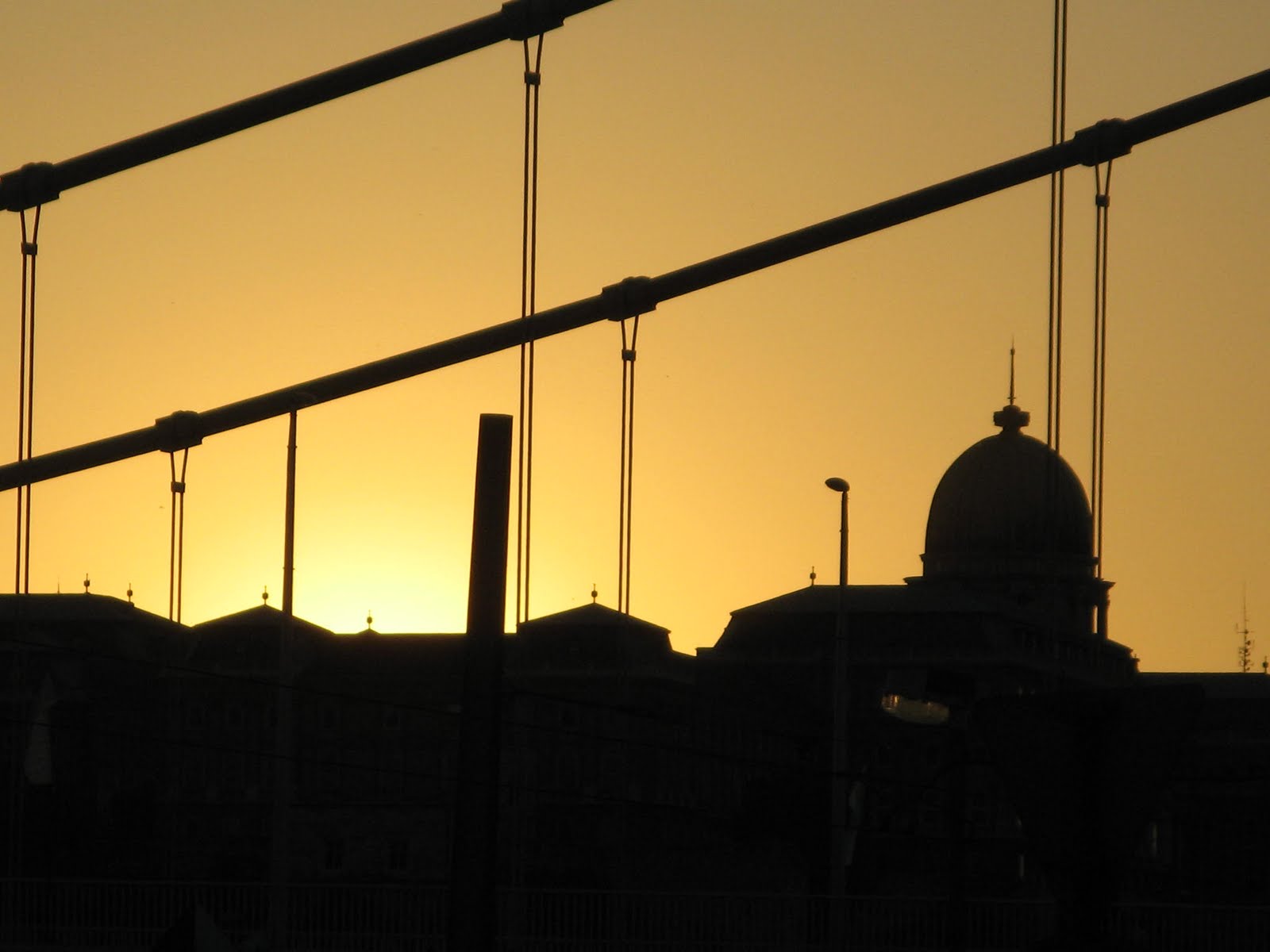
At night Budapest becomes magical. It's a city of lights spanning the Danube. Stroll along the river. Stop at a cafe for a glass of wine. Watch the sun slowly set over the Danube and hills beyond. Soak in the beauty of a city opening to the night.


Next day it's off to Castle Hill. Like bookends, the hill is framed by Mathias Cathedral and a Castle with lesser buildings in between. We ride an incline to the top and get a panoramic view of Pest. It's beautiful.


Matthias Cathedral has a 700 year history and is an icon of the Hungarian spirit. Tural, a mythical guard bird, keeps watch from pinnacles.
Even with Tural's watchfulness, the Cathedral has been sack and rebuilt several times.

During the Ottoman Empire occupation, it was converted into a mosque. Mosaics were white washed into oblivion and all images removed as required by Islamic practice. A statute of Mary was hastily hidden behind a false plaster wall. A century later when the Hungarians sought to oust the Turks, a volley of cannon balls broke through the plaster wall and Mary miraculously reappeared. So stunned were the Turks that their morale was broken and they lost the war. The Cathedral was once again Christian.


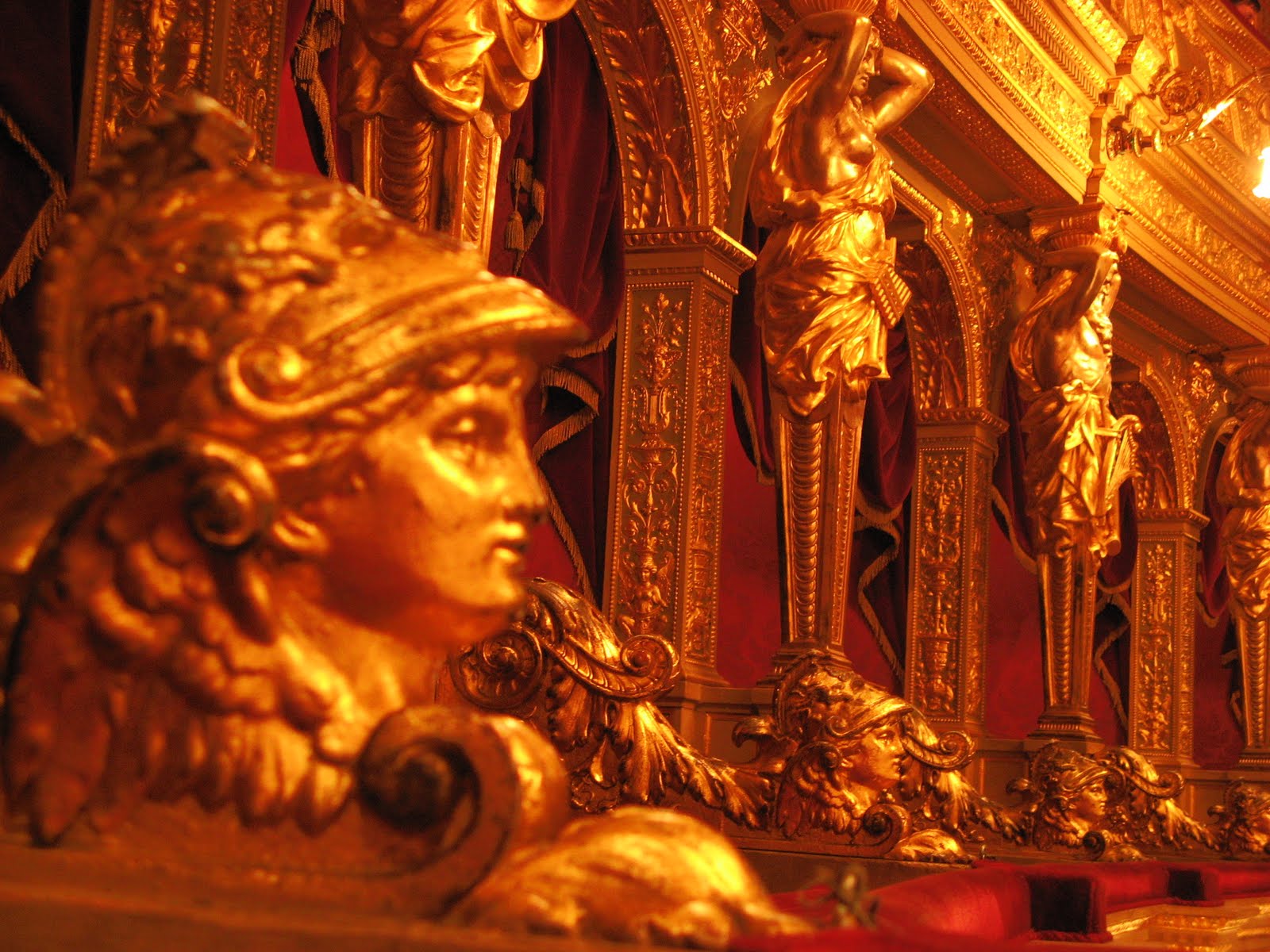
We extend our visit in Budapest and get a chance to try out a new Hostel. This one is next to Budapest Opera House. I'll long remember a late afternoon siesta with summer breezes waffling though tall windows as an operatic soprano rehearses across the street. Does it get any better?

We buy tickets for a world premier of a modern ballet. The grace and energy communicates emotions without words. Music and movement unites a diverse audience with the performers.
In one piece the audience is so absorbed that for a few seconds we forget to applaud. Then we remember and we applaud and applaud with deep gratitude and roses are flung onto the stage. Bravo!

A growing heat wave sends me to the mineral baths. Budapest is on a fault where natural mineral springs percolate streams of hot mineral rich waters. Locals and the government claim healing benefits.

I go to a bath with more than 18 different pools inside and out. Some are for swimming and others are for soaking. You can even visit a sauna and then jump into near freezing water. Brisk and refreshing, they say. I do not try it thinking that my heart will thank me.

I spent lots of time swimming followed by soaks in progressively hotter water. I must report that after a day lounging in baths, my body fells like a 35 year old. Gone are minor aches, especially my soar feet. I feel rejuvenated.


I love Budapest.


It's funk.


It's architectural beauty.


It's culture.


It's enduring spirit.


And yes, a cool swim on a sweltering afternoon.


Saturday, June 12

Part I Auschwitz - Birkenau

It's 1945. A new life begins. From the moment of inception, cells begin to divide. Hundreds, thousands and millions growing and forming tiny legs and arms and fingers. Skin and bone mold a unique face within the womb. Soon a baby will press out and into the world. He will be named Judson Wesley Dolphin.

At the same time in 1945, there is death. The Concentration Camps of Auschwitz and Birkenau are multiplying their victims. Lives are ending to soon and too quickly. Mostly, the bodies in those Concentration Camps consumed themselves. With less than 1000 calories and more than 11 hours of hard physical labor each day, the cells have no choice. They consume one another to survive if only for another day.

Legs and arms loose muscle mass becoming tiny again. Skin seems translucent sagging like wet tissue paper on bony protrusions. Faces dim becoming devoid of emotions. It's like the soul is trying to lessen the horror in some vague way.

Slowly cell by cell, life is taken away. The process will be repeated 1,500,000 times in these two places. Later in 1944 and 1945 gas will hasten the process and crematories will clean up the mess. Mass murder has its own learning curve.

I am visiting the Concentration Camps outside of Krakow Poland. My Friend and travel companion, Fran, says, " I don't want to go, but I must." I feel the same. My life began just as these places became known and the world vowed "never again." I cannot help but feel a human connection. I both want and hate the idea of seeing these places for myself.


Electrified Fencing at Auschwitz

It's about 90 minutes bus ride to Auschwitz from Krakow. Tidy country homes dot the countryside. Fran and I point out the sights to one another from our bus window. All seems so normal and beautiful. The fields are sprayed in deep summer green. Splashes of red field poppies add enchantment. Life is beautiful.

Yet I remember that in 1945, human bodies came in this same direction. Routinely across these fields and hills, they came to Concentration Camps. Legs and arms stuffed into railroad box cars which were meant for animals. With no food or water and barely air to breathe, bodies came from all over Europe. Auschwitz was selected because of its central location. Originally for Polish prisoners, it would now leave a legacy of death for Jews and Gypsies and Homosexuals and other so called political and social misfits.

A film of those years is shown on the bus. A young Soviet photographer captured the pictures as the Camps were liberated. He says, "Time can never erase these memories."

I see for myself. In my mind's eye, images appear as if they are ghost reflections on the glass surface of the bus window. They appear for a few moments and then disappear as the beauty of the countryside takes over. But no, the images cannot be forgotten and even more await me as I draw closer to Auschwitz.

First Crematoria at Auschwitz

Friday, June 11

Part II Auschwitz - Birkenau


The contrast continues at Auschwitz. Pounded out in wrought iron letters and hanging between posts at the front gate are the cynical words - "Work will set you free."

I walk through the gate and have my first look a Auschwitz. Immediately, I notice the neat orderly rows of brick buildings. They look like dormitories on a college campus.
But Inside, prisoners were kept 3 bodies to a bunk stacked three high. Displays tell the story of what went on here from 1940 to 1945.

Originally, Auschwitz was meant for Polish prisoners. They would be brought here and worked hard until disease or starvation ended life - usually within 5 months.

Latrines where prisoners would often hide

Our guide tells us that names and faces were problematic. The Nazis had an insatiable need to be in control of everything - even those they murdered.

At first they took photos of those who came to the Camps so that they could identify who died. But the Camps were growing quickly and the need to process more bodies made photos impractical. Besides as the body eats away at itself, appearance changes making absolute identification uncertain.

Uncertainty was a threat to Nazi supremacy. So they developed the practice of tattooing numbers. Match the numbers with the record card - Nazi certainty. When Ally troops liberated children in 1945 and asked their names, the children simply pointed to the numbers on their tiny arms or legs. Names no longer mattered.

Somewhere around 1942, the ideology of racial supremacy connected with the efficiency of Concentration Camps and created a mechanism for mass extinction. The Nazis were learning how to handle hundreds of thousands of bodies.

Separate women and children from the men. Get rid of the children first and then the mothers. They have no work value. One of the lasting images is a large display case with little children shoes. My stomach actually gets acid reflux as I spy a clump of baby booties in the mound of remains.

Our guide tells us more about the sorting of human life. With a quick nod, doctors ordered healthier men to the work barracks and sick ones to the hospital and certain death. A jumble of eye glasses, maybe several thousand, are in a display case. I take my glasses off and hold them next to the pile with only glass separating us. I shudder, but not quite silently.

Nazi lust for racial purity lead to many twisted enterprises. Doctors experimented on women in search of an injection that would cause sterilization. Injections had an advantage over gassing. There would be no body refuse to clean up. In this medically clean way, Nazis could rid the world of other undesirables, like Slavic people, after they had taken care of the Jews.

Remains of Baracks

The killing machine expanded. An adjoining Camp known as Birkenau was started. Unlike Auschwitz where people had to walk from a train station into the Camp, at Birkenau, the tracks came in through a narrow gate and spread out across an open field.


After the initial sorting, women and children were promised a shower at one of 4 buildings on the far end of the field. They walked along the train tracks to their death.

I walk the same train tracks from the crematories towards the open gate. I count the railroad ties separating the two. There are over 4,000 withe each tie being a step. How long does it take to walk 4000 steps? How long until life is showered away?

The sun is blazing hot with temperatures more than 90 F. Step by step, a strange image enters my mind. It seems like I am walking along a kind of birthing canal.

Visually I see the opening of the gate. Except this one is in reverse. It starts among the living in the outside world and draws human life into a womb of death.

Birkenau was so efficient. The exact number is unknown, but our guide says about 1.500,000 died here including more than 235,000 children. They say that 95% of all Jews brought to Auschwitz-Birkenau were dead by 1945, the year of my birth.

Slowly I walk the train tracks and count the ties and think about living and dieing.

I remember an Elder from Trinity Presbyterian Church in Pittsburgh. He once told me to be careful about too much religion and I would add now, about too much ideology. I dismissed his advice at the time being a bit of a zealot myself, but as years have passed I understand his wisdom.

It seems to me that whenever any group believes that they have unshakable certainty, no good will follow. It matters little if it be the Taliban in Afghanistan condeming moderism or the Christian Radical Right condemning homosexuality. Certainty in a cause breeds intolerance and soon breeds hatred.

Sometimes people are willing to sacrifice freedom and life in order to have their own way enforced. I think it's a kind of lust for control and power. Sure we can wrap many rationalizations around the certainty of our cause and give it a more respectable appearance, but I think it stills eats away at human life.

I want to remain a skeptic. Maybe the horrific legacy of 1945 can be a reminder. There is no good in having it all figured out. Life is a beautiful mystery. Uncertainty always opens space for living freely.

What do you think?

Monday, May 10

Just a Bike Ride

My cell phone rings. "Are you planning to join us for the bike ride," asks Anton. He is a student at the Konotop Institute and parliament president. I got to know him through my organizational development seminars.

About a week ago, he suggested that I might enjoy a bike ride. I think he saw my bike at Hearts of Love Center. Since the weather turned warm, I have been trying to ride several times a week.

Mine is an old Soviet bike which was given to me to use for the duration of my stay in Konotop. It has those thick tires and old fashioned coaster brakes. I had to relearn how to peddle backwards in order to stop. Yikes!

There's nothing sleek about this bike. I think it weighs about 100 pounds or at least it feels that heavy when I want to ride and must first haul it down and then back up 4 flights of stairs.

I agree to join Anton for the bike ride. I am thinking, “Great fun joining a few university students for a ride on a pleasant spring morning. So I pump up my tires - Eat a protein rich breakfast - Haul the bike down the stairs - Put on my helmet - And start peddling.

Casually, I make my way to our meeting spot in the center of town. As I turn the corner, I am totally surprised. The unexpected greets me.

About 200 young bikers are massing in front of the Post Office. A few adults are busy organizing the chaos into rows as if the bikers were soldiers getting ready for a parade. My ride with a few friends is actually a healthy life style event for all of Konotop's kids.
Bikers gather for the Healthy Life Style Event

No problem. I will just blend into the back row. Ha! Who am I kidding?

First, I am the only kid with a helmet. Second, I’m no kid. In fact, I am the oldest person within sight. Third, my bike is straight out of the 1950s Soviet Sears and Roebuck Catalogue if they had such a thing. I am as conspicuous as a Soviet flag would be at a 4th of July celebration.

Anton greets me with a video camera. He tells me that he won’t be riding but capturing the day digitally. A TV crew is here too. “Great,” I think, “now there will be a record!”

Before I know what is happening, I am in the front line of all the bikers. The plan is for the American and two others to lead the pack. Me - in the middle, leading 200 kids on bikes. Can you believe it? Yikes...Leading the way
Adrenalin pumps and deep breathes calm my nerves, barely. We are off on a 3 kilometer ride with eager kids nipping at my back tires. Luckily it is rather flat terrain in Konotop and the only hill is towards the end. I chug up the hill with a few kids passing by. I blame it on my chunky tires.

We swerve into the school yard all smiles. The next few hours will be filled with competitions. The kids line up to participate in everything from chess to arm wrestling to hoops to badminton to tug-of-war and more. On a stage there is Ukrainian singing and dancing. There’s even a Kung Fu demonstration. The kids are particularly attentive as leg blows are traded.
Anton tries on my helmet

What a wonderful day, it’s turned out to be. It’s not what I expected, but I’m thinking, “This is Ukraine and it's my first bike run ever. Wow, I made it.”