Translate

The content and opinions expressed in this blog are mine. They do not represent the US Government or US Peace Corps - Jud Dolphin
Showing posts with label Art. Show all posts

Friday, March 27

AJIJIC, MEXICO IN PICTURES

Is one picture worth a thousand words?  
Let's give it a try....


Lake Chapala from a mountain vista  
Central to my adventure is Lake Chapala and the village of Ajijic on its northern shore.  Aijic emerged from the lives of indigenous tribes.  In ancient times, Ajijic meant a "place where water springs forth."  

Even today, Lake Chapala is still the largest lake in all of Mexico - 14 miles long. It's about 40 miles south of Guadalajara in the central region of Mexico.     

Long before the Spanish came, ancient peoples inhabited the lake area and came and went as the waters rose or receded.  They fished and raised their families here.  Much of their culture remains.    
Often I walk the lake shore in the evening.

Sunsets never disappoint
In the 1920s, intellectuals and dissidents came to Ajijic mixing with native people.  Another influx began in the 1950 - 60's.  And still another is happening now as mostly Canadians and North Americans look for retirement places.    


Art and Creativity are abundant companions 
in Ajijic.
Community beautification 
A Giant Lizard keeps watch
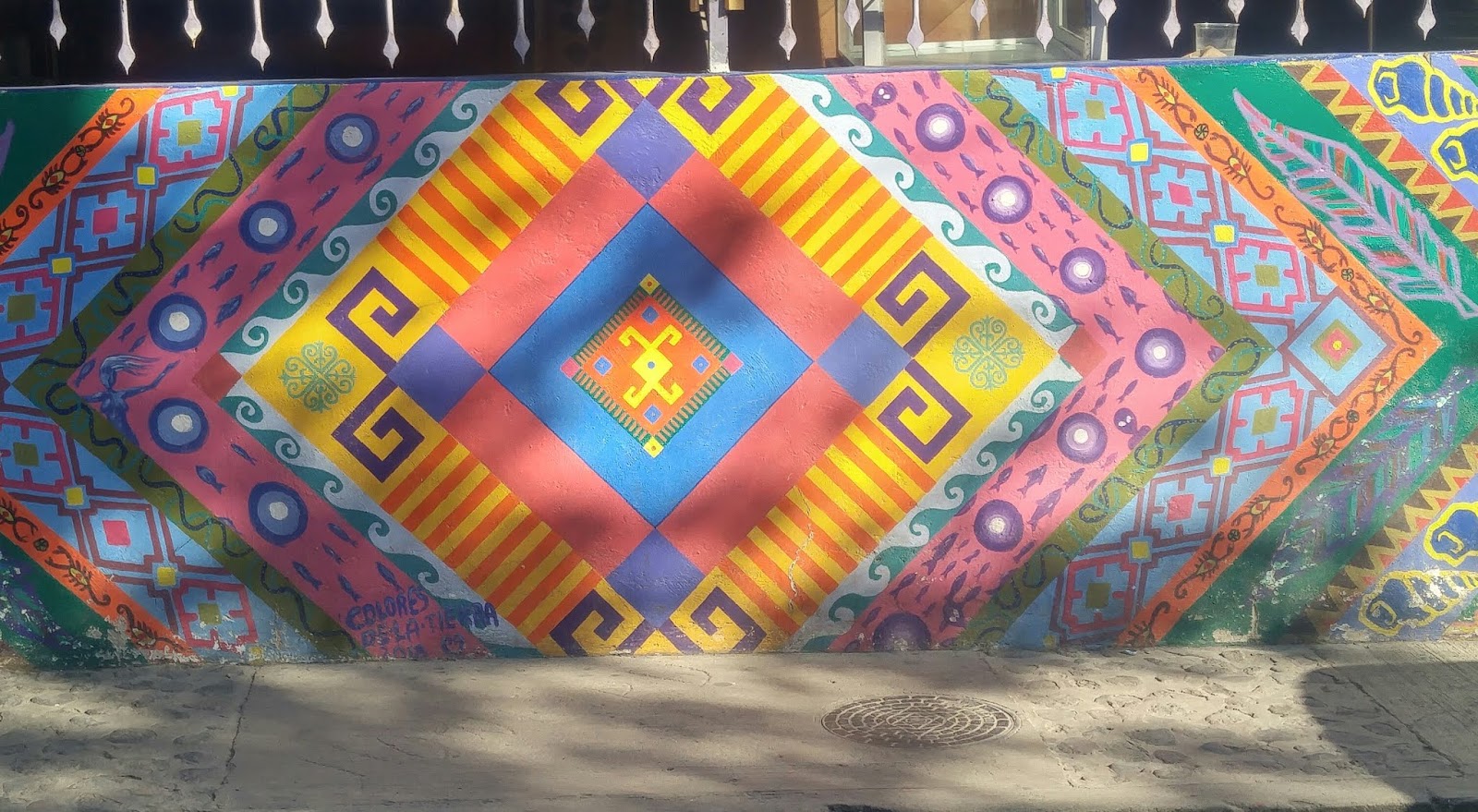
Fanciful Imagination enlivens a bare wall
Striking a pose in front of the Cultural Center

Carved from a log and painted by a local artist
More sunsets reflect across Lake Chapala. 
It's a beauty


Enjoy music, dance and more
After school, students practice in the park

A few ESL students share a song
Almost every month parades
and festivals flood through the streets


Ancient ritual reenacted

Mariachis are the soul of Mexican music

Original from Ajijic

Danza de los Voladores - Dance of the Flyers


Additional video from YouTube

Overlooking Ajijic Plaza 
where friends and family gather


Wednesday, December 30

Vienna at Christmas

Vienna at Christmas. It’s a place of music and museums; architecture and history; churches and Christmas markets.  And Oh! I can't forget cafes.  

Viennese coffee house culture is world famous. As they say, people pay for the coffee, but it’s the friendship and conversations that are consumed.  I hunt for Café Landtmann. It’s the one that Freud frequented.  It still stands on a corner near the University.
I walk in. A formally attired waiter directs me to a table. I imagine Freud walking over to that cozy corner. The parent of psychoanalysis goes from couch to café and back again and here I am.   I scan the menu. It has pictures so there’s no problem in ordering. My treat is going to be hot coco with chocolate and pistachio swirls. Yum! Wish you were here.  

Learnmore about cafe culture. 


Three guys are so deep in conversation that
they don’t see me taking their picture.


Tonight I go to my first concert. I've planned for two more in smaller churches - Trumpet and Organ Duo and Mozart and Beethoven String Quartets.  Also if I can get a ticket, I want to go to a Strauss and Mozart extravaganza at the Palace.  

But for now,  it’s a Christmas Mass at the huge Gothic St. Stephen’s Cathedral.  As I get off the Underground, a cacophony of sounds and sights smack my senses. Street musicians play. Men in seventeenth century dress hawk tickets for concerts. Families pause to gaze at lights as little one are filled with wonder. People scurry everywhere.

Outside of St. Stephen's Cathedral
I open the thick oak doors, pause at the holy water and then find a seat. A young woman next to me shares a program. I simile in appreciation, but, of course, it’s in German. I take a deep breath and listen to the organ prelude relaxing into the music. It’s Christmas in Vienna.
My days are filled with sight-seeing. So many buildings show off their baroque heritage. Others are more modern. Yet all seem to blend together harmoniously. It’s a pleasure to walk the streets.


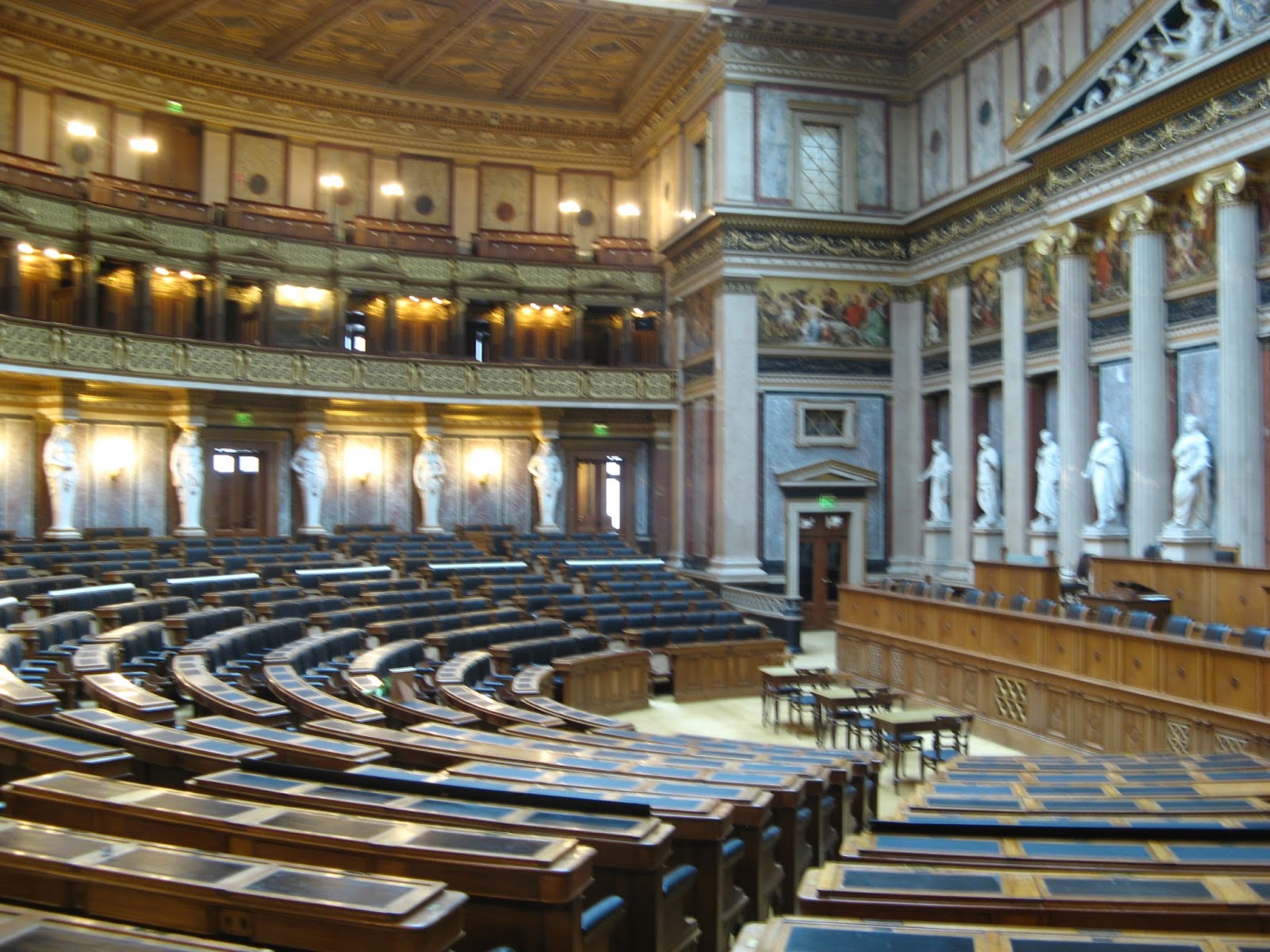
I take time for a tour of the Parliament building. The style is Grecian with some Roman influence. Athena stands tall in front. I’m told that in a multi-religious country, it’s important not to publicly promote one faith over another. So you do not see Christian or Islamic or Jewish symbols here.


Front Of The Parliament
Interesting Details On Many Buildings
It was built during the long reign of Franz Joseph, Europe’s last great monarch. He allowed it to counter political instability, Limited democracy had a foothold. The modern era was beginning and a world war would soon unravel everything.
Inside the Parliament
Learn more about this interesting history of Austria. 
I’m off to Schonburnn Palace. It was the summer residence for successive monarchs of the Hapsburg dynasty. Imagine the accumulation of wealth that created this place. Such massive income inequality.  
No picture taking is allowed inside the Palace. But I did take plenty outside. Fortunately, today is bright, blue and breezy. I walk my feet off!
Summer Palace of the Hapsburg Dynasty

Summer Palace Gardens 
Warm Enough For A Beautiful Water Fountain
In Vienna Christmas markets are spread out across the city. I wander into one that’s in front of City Hall. A giant tree with lights sets the tone and gluehwein, a hot wine drink, warms the body and spirit. I’m on a mission to get a few gifts for my grand kids and my great nieces. What fun.
One Of Many Stalls At The Christmas Market

Giant Tree In Front Of Vienna's City Hall
One of the features of Vienna is a Tramway that encircles the center of the city. I hop on the “Yellow Tram” since it’s equipped with an audio travelogue in multiple languages. It’s a good way to get an overview and find places to explore more deeply.


Comfortable seating makes this museum even better
I return to Kunsthistorisches Museum. It was was built in 1891 near the Imperial Palace to house the extensive collections of the Hapsburg imperial family. It’s considered one of the most eminent museums in the world. I spend the afternoon wandering from salon to salon.
I take a break in a café that occupies the grand rotunda. The building itself is an impressive work of art.
Central Dome With Staircase On Either Side

I'm Introduced to Pieter Bruegel Work

Pieter Bruegel
It’s Christmas Eve. I return to the oldest church in Vienna. However, because of my lapse of judgment and knowledge of the Underground system, I arrive about 2 1/2 hours before mass. What to do? The streets are nearly deserted, cafes are closed and it’s cold.
Then I see an establishment and it’s open. I wonder why, but I’m grateful to walk inside. I order a coffee and I as I often do when traveling solo, I start a conversation with two young women at the table next to me.
St. Ruprecht Skirche (Church)
I tell them about the church I will be attending. It’s the oldest in Vienna dating back to about 775 CE. The first edifice was built in the 12th century. It’s small more like a chapel. Unlike so many other churches in Vienna, it’s plain, definitely not Baroque.
I discover that the church stood next to a large hotel that the Nazis commandeered for their HQs during WWII. Towards the end of the War, the Allies bombed the hell out of the HQs until only ruble remained. Amazingly, no bombs hit the Church. Only windows were shattered because of shock waves.
Now the church sits beside a park where a memorial has been constructed for those murdered by Nazi hate.
I say goodbye to my new friends and pay my bill. I ask my young waiter if the cafe is owned by Muslims. He doesn’t know for sure, but he says, “ like me, most (workers) are Muslim."
I smile and explain my gratitude for this place being opened and Muslims generally.  He smiles back and we shake hands.
I’m climbing a long flight of stairs. It feels like going on a pilgrimage. As I enter the Church, I see no Christmas tree up front. Instead, a soft  sculpture stands looking a bit like a make-shift tent -  the kind kids make in the backyard.   Except this one is not for fun times. 
A Tent Is No Home
It's entitled "A tent is no home."   I’m told the artist wants us to ponder the refugees fleeing wars in their homelands. I think about Mary and Joseph who were like refugees. After all a stable is not a home either.

The Christmas Eve service is a long one.  Starting with Genesis, a lot of sacred history is recounted.  Of course I understand nothing directly, but I try to feel the spirit of this place.  It's a good one.  

Afterward people are friendly. “Are you coming to the party,” I'm asked?  I think why not and go. 
I'm Introduced To An Older Menber
I'm curious about how the church managed through the Nazi period.
I'm introduced to some of the older members.  I think the subject would make a fascinating doctoral study

It's after 3:30 am before I unlock the door to my hotel room.  I'm tired, but elated. It's turned out to be an amazing Christmas Eve.

On my final day, I take a walk and discover the Einstein Cafe.  I have a lovely conversation with a Greek couple.  It's one of the joys of travel - meeting new and interesting people.  

They take my picture.  I'm very happy.  I'm thinking that because of the name of this place, I'm getting a bit smarter or maybe just more of a Smart Axx.  (Chuckle)
That's it from Vienna.  From me to you....Merry Christmas and Happy New Year.

Saturday, July 11

Macedonian Collaboration and Social Entrepreneurship

Coming together is a beginning,
keeping together is progress,
working together is success.
                           ...Henry Ford
 

Our office is buzzing with activity.  Tonight at a cafe, we'll launch another issue of Лице в Лице, our street magazine. 

Lice v Lice means “face to face” in Macedonian.  The name is based on the way the magazine is distributed.  Instead of selling on-line or by subscription, it’s sold on the street “face to face” by vendors.

Our vendors are the homeless, Roma, disabled and others living on the margins.  They go to office buildings, street corners and other public places selling Lice v Lice. For their efforts, they collect half of the cover price - about a dollar.   It’s a form of social entrepreneurship. 

Social Entrepreneurship is an idea that has been expanding among NGOs. Business practices are used to sustain NGOs while achieving social good. For my organization, the business need of selling the magazine also achieves income and opportunities for those who have little of both. 

Street papers are a movement that has been spreading across the globe. Recently leaders from 115 papers in 36 countries gathered in Seattle, Washington to share best practices and be inspired by achievements of one another. 

Together the street papers boast 6 million readers for each edition. Learn more. 

Lice v Lice participated in the conference and presented a workshop. Others were impressed with the depth of our magazine's content. Every issue is over 65 pages and focuses on a major social issue.

To give you an idea in English, here is a link.  Read more about this social issue called Embrace Rarity.

I like the mix of data with human story and policy suggestions. People say they buy the magazine to support the marginalized but then discover it's a good read on issues that rarely are heard in mainstream media. What do you think?

The launch event starts.  We're filling the Rakia Bar, a trendy place in the heart of Skopje. The event is part of an emerging marketing strategy. It draws attention of the media and brings together a growing number of supporters. 

Tonight 200 will eventually spill onto the streets.  It's exciting.

Bundles of the magazine are carried in. I leave the heavy lifting for the younger ones. This month’s issue focuses on social responsibility and collaboration between business and NGOs. 

According to Klimentina, Director of my organization, “It’s an area that is not well developed in Macedonia. We want to encourage more.”

Underwriting tonight's event and publication costs is Knauf, an international building supply company. 

It's a first for them in Macedonia and demonstrates corporate leadership. Robert, our liaison, tells me he admires the work of Lice v Lice and is glad Knauf can help.

Robert and Klimentina
Actually, his involvement sparked a creative idea. In transporting their products, Knauf uses industrial bags. Could these bags be re-purposed?

I'm not sure how, but together Klimentina's and Robert's creativity went into over-drive. They caught an idea that these old bags could be transformed and made into something beautifully unique.

Klimentina contacted a designer friend, Irina. Soon she came up with a pattern and created a prototype for a tote bag. Other designers got involved with original art work to decorate the bags. From industrial bags emerge totally unique totes. Collaboration works.

At the event, the bags, a la totes, are on display for sale. People crowd in to take a look. It feels a little like bargain day at Filene's basement. Before long, actually less than 30 minutes, all the bags are sold. 


Cory, the Peace Corps Director in Macedonia, beams as she snags one of the last ones.

I think it adds excitement and an urban edge to the evening.  And I can’t help making an analogy. If these industrial bags can be transformed, then maybe urban societies can be too. People on the margins included and valued face to face.  Read more about the bags

But there’s more to the evening. I had assumed that the proceeds would go to Lice v Lice. Budgets are always a challenge. But no, Klimentina informs me that there's a special purpose.

We decided to organize a collaboration with the Center for Street Children,” she says. She goes on explaining how they helped them before, but nothing sustainable. The Center tries to offer a lunch program, but sometimes there's not enough food.

Staff: Aneta, Zarmena, Alexsandra, a vendor, Klimentina, Maja
Nebojsa missed this picture.  He is off doing something important
Unknown to me, Zarmena on our staff makes many calls until she finds 4 food companies ready to donate. Tonight's money will provide the missing link.

We'll rent a van and every week the driver will collect and deliver the food,” says Klimentina as she turns to me and asks, “What do you think?”

I’m amazed. Food for street children. 

 Lice v Lice not only writes about collaboration, publish a magazine about collaboration and gets Knauf and designers involved, but they also manage to create collaboration where street children are fed. And to make it even more amazing, it's sustainable – food from re-purposed industrial bags.

I'm thinking...

“Coming together is a beginning, keeping together is progress and working together is success.” 

Henry Ford said it first and now I see it in Macedonia.  Collaboration and social entrepreneurship working together.  

Success.